Scandinavian interior design
The complete style guide with must-haves
4 min leestijd
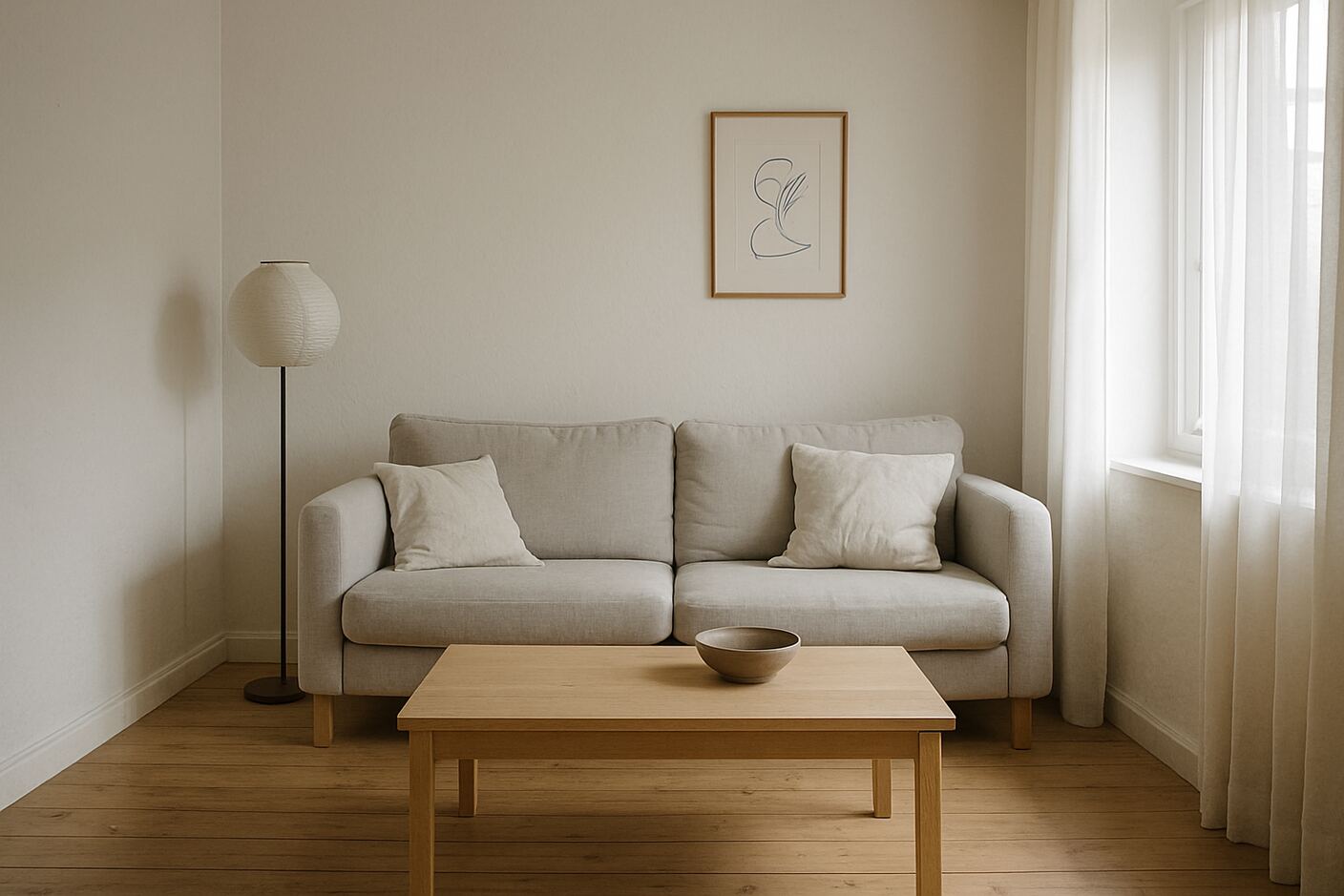
Scandinavian style has been the most-searched interior look in the Netherlands for years — and that's no coincidence. The Scandinavian climate isn't far from ours: long, dark winters spent largely indoors. The style was literally developed to make homes feel light, warm, and functional whatever the season. Here's what it actually means (beyond "white and wood"), which elements are essential, and how to make it work in a Dutch home without turning it into an IKEA showroom.
What makes an interior "Scandinavian"?
Five principles: 1. Maximise light — colours and materials that reflect what little daylight there is. 2. Function over decoration — every piece has a purpose. 3. Natural materials — wood, wool, linen, leather. No plastic, no high-gloss. 4. Hygge — cosiness through textiles, candlelight, and soft shapes. 5. Simple but not bare — minimal in line, warm in texture.
What it isn't: a bare white room with a grey sofa. A well-done Scandi interior is warm and layered.
Three colour palettes
Classic Scandinavian: white, beige, light grey, light wood. Iconic but can feel cold in dim rooms. Modern Scandinavian: white with deep accents (dark green, dark blue, terracotta), light wood and black details. Lively but still calm. Scandi-Boho: white base with woven textures (jute, rattan, macramé), green plants, terracotta or soft pink accents. Popular with young families.
The must-have pieces
A light, shallow sofa on legs Not a chunky lounge — a 2.5- or 3-seater with clean lines on visible wood or metal legs. Colour: ecru, light grey, or soft beige. Fabric: bouclé, linen, or wool. A wooden coffee table or side table Round or organic shape, light wood, smooth finish — no high-gloss. Often one low and one tall side-by-side for playful asymmetry. A Wishbone Chair (or alternative) Hans Wegner's 1949 classic remains the most iconic Scandi piece. Not cheap — even a good lookalike instantly gives your interior the feel. A natural rug Wool, jute, or a wool-cotton blend in ecru-grey or a soft pattern. No Persian rugs, no synthetic shag. Texture is welcome; loud colour isn't. A floor lamp with linen shade Light should come from everywhere, not just the ceiling. Floor lamp next to the sofa, reading lamp by the chair, small table lamps on a sideboard. Ideally dimmable, warm white (2700K).
One large green plant Not a jungle. One olive tree, Strelitzia, or large ficus in a light pot. Statement, not clutter.
What you absolutely don't do
• No cold LED light. Cool white (4000K+) instantly breaks the hygge. • No plastic "wood-look". Plastic with a wood print, absolutely not. • No busy wallpaper. Plaster, clean white, or soft paint. • No accessory overload. Three nice things on a sideboard, not fifteen. • No "rustic chic" farmhouse kitsch. No "Live Laugh Love" pillows or wooden quote signs.
Scandinavian in a Dutch home
Three places Dutch homes tend to struggle: Dim back rooms. Many terraced houses have a back room with little direct daylight. Classic white-on-white turns grey there. Switch to warmer tones (soft beige, terracotta accent) and add multiple artificial light sources. Narrow rooms. Many classic Scandi lounge sofas are 110–120 cm deep. In a Dutch 4 m wide living room that's unworkable. Stick to 90–95 cm depth. Pure white walls with yellow ceilings. Older urban homes often have yellowed ceilings from old plaster and historic smoking. Pure white walls make that contrast loud — soft off-white works better.
Where to buy in the Netherlands
Beyond the big brands (IKEA, HAY, Muuto, &Tradition), several Dutch retailers carry strong Scandi selections. Westwing regularly curates Scandi edits; Wehkamp offers plenty of affordable pieces in the style. House Doctor, Bloomingville, and Ferm Living all have good distribution here.
Visualise before you buy
Scandi design lives and dies by subtle colour harmony. A too-warm beige sofa next to too-cool grey curtains can leave a whole room feeling "finished but not quite right" — hard to predict from a single product photo. Tools like Veyra let you see different Scandi options in your actual room, so you can spot the colour tension before you order.
Frequently asked
Is Scandinavian interior design expensive? Not necessarily. A good Scandi room is a mix: one durable hero piece (a dining table or designer chair) and the rest affordable. You don't need a €4,000 sofa.
Does Scandinavian work with kids? Yes — very well. Functional pieces on legs (easy to clean under), washable fabrics, few trinkets to break. Just don't pick pure white sofas or high-end velvet. What's the difference with Japandi? Japandi is Japanese minimalism fused with Scandinavian living. Tighter, more empty space, more black details, lower to the ground. Scandinavian is warmer and more layered.
Zie het eerst. Koop het dan.
Upload een foto van je kamer en Veyra laat je echte meubels zien, geplaatst in je eigen ruimte — binnen een minuut.
Probeer Veyra gratis