Small living room ideas
12 practical tips that actually work
4 min leestijd
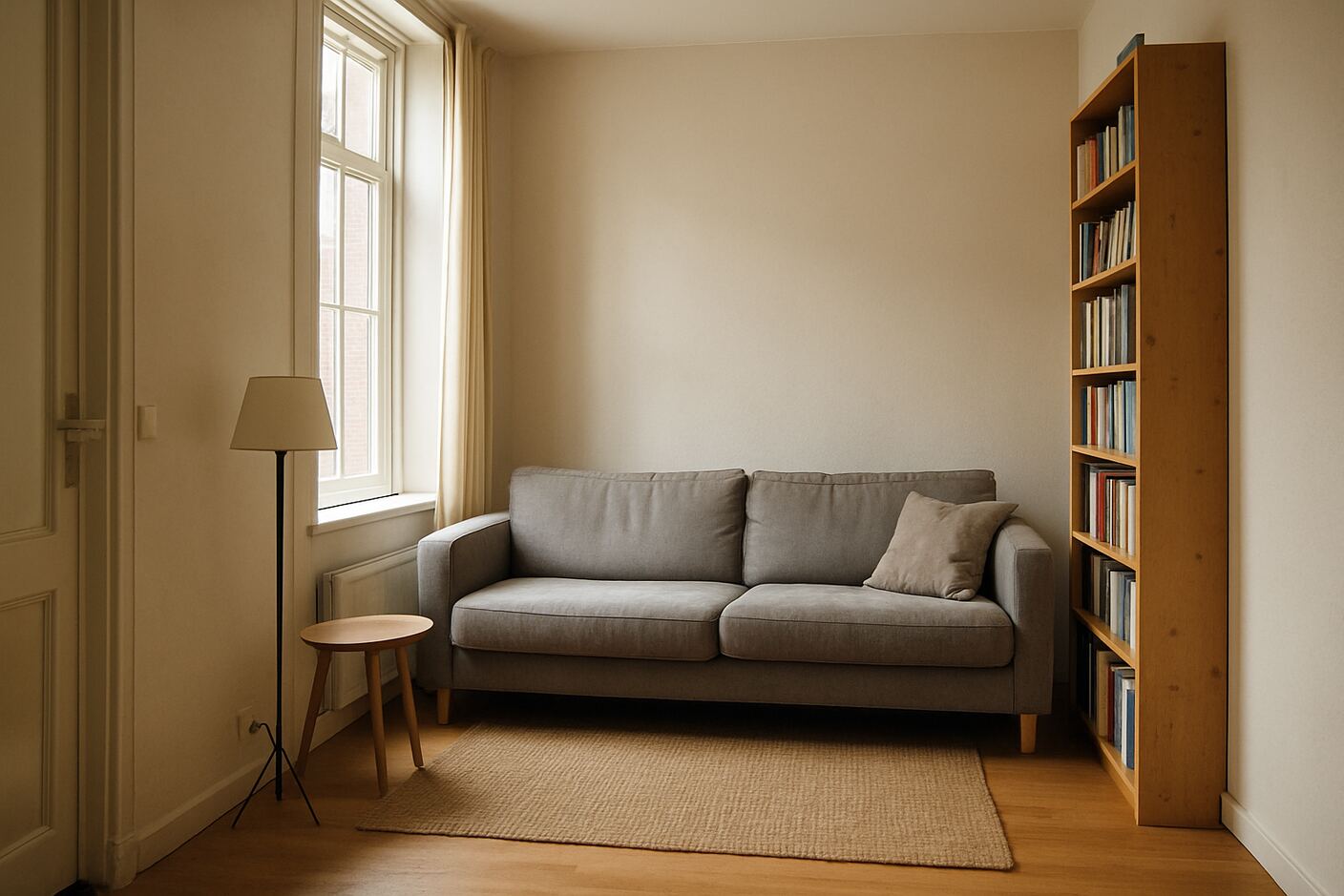
A small living room doesn't have to feel cramped. With the right choices, 16 m² can feel more spacious than 24 m² done badly. Here are twelve tips that genuinely make a difference — not "use mirrors" or "paint it white," but concrete moves you can make this month.
-
Choose furniture on legs A sofa, cabinet, or sideboard that sits flat on the floor visually eats space. The same piece on slim legs lets your eye flow underneath — and your brain reads the room as larger. Cheapest move, biggest impact.
-
Keep one visual rest point In a small room it's tempting to use every wall. Don't. Keep at least one wall visually quiet — just one piece of art, or empty. That single rest point gives your eye somewhere to relax.
-
Don't automatically go for the smallest sofa Counter-intuitive but true: a small sofa in a small room doesn't make the room larger. Often busier, because you then need extra pieces to make up the seating. One good 2.2 m sofa often works better than two armchairs and a 1.8 m bench.
-
Think vertically Floor space is limited; height usually isn't. Use ceiling-height bookcases or open shelving to push storage upward. One tall cabinet to the ceiling visually feels lighter than two short ones side by side — and stores more.
-
Avoid too many small accessories Three large, beautiful objects on a sideboard do more than twelve trinkets. The eye rests on the large; the small becomes visual noise. Goes for plants, picture frames, candles — everything.
-
One large rug, not several small ones A rug that runs under the sofa and anchors the seating area makes a room feel larger. A small rug only in front of the sofa does the opposite — it chops up the space. Rule of thumb: at least 60 cm of rug under the sofa.
-
Be careful with very dark
Dark walls or large dark pieces can work in a small room — provided you have a good lighting plan. Without enough light sources it gets cramped. With a floor lamp, hanging lamps at different heights, and a reading lamp, it gets intimate instead.
-
Choose multifunctional pieces A pouf with storage. A coffee table with a drawer. A dining table you can slide back. In a small room every square decimetre counts double when it does two things.
-
Think about where guests sit Many people decorate for themselves and only realise at the first dinner party that there's no comfortable spot for six. No separate dining table? Consider poufs or a bench by a low sideboard that can move to the balcony in summer.
-
Keep the walking paths clear Nothing makes a small room feel tighter than furniture in the walkway. Mentally draw lines between the door and every usage point, and keep at least 60 cm of clear path.
-
Curtains to the ceiling Hanging curtains right above the frame makes a window look short. Hanging at ceiling height with curtains skimming the floor stretches the room vertically. Costs nothing (besides the rod). Huge effect.
-
Test virtually before you buy A small room is less forgiving. A mistake in a big loft you can absorb with other pieces. In 16 m² every mistake becomes the main course. Tools like Veyra let you see how a sofa, cabinet, or dining table looks at your place — before you commit. In a small room that's the difference between "I love living here" and "I have to return it."
Frequently asked
How small is "small"? In the Netherlands: 12 to 20 m². Under 12: it's a seating area or studio section. Over 20: it's a normal living room. Which colours make a small room feel larger? Light, cool tones (soft white, light grey, pale blue) reflect light. But deep warm colours work too — provided you have good lighting and a light rug. Does a corner sofa fit in a small living room? Only if the room is roughly square. In a long narrow room a corner sofa becomes a block that eats the space. The chaise is usually 1.5 m — fatal in a 3 m wide room.
Zie het eerst. Koop het dan.
Upload een foto van je kamer en Veyra laat je echte meubels zien, geplaatst in je eigen ruimte — binnen een minuut.
Probeer Veyra gratis